

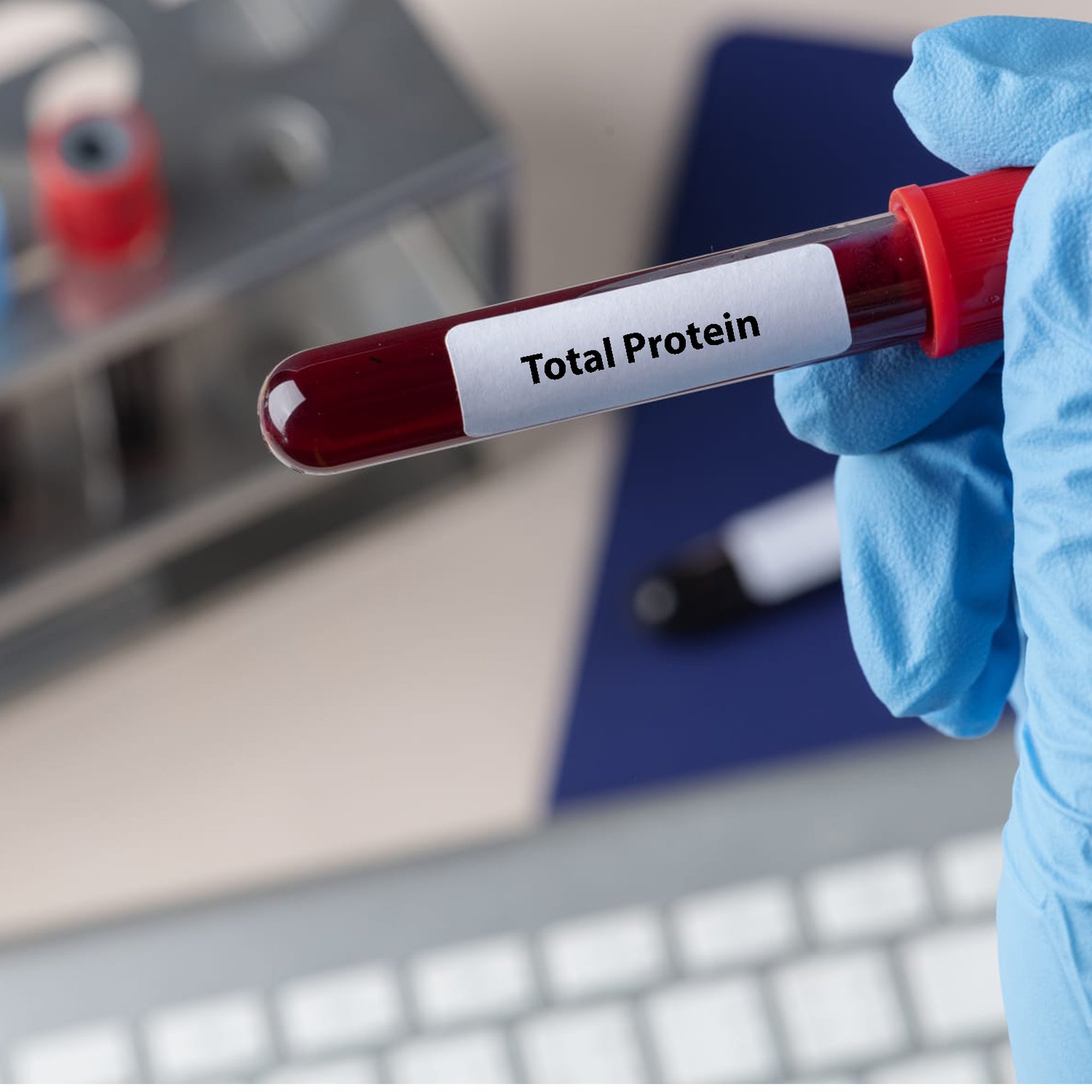
Total Protein
Total protein is a parameter measured in blood tests that indicates the total amount of protein in the blood. This test is conducted to determine the protein levels in the liquid part of the blood known as serum or plasma.
The protein content in blood consists of a combination of various proteins, primarily including albumin and globulins. Albumin, the most prevalent protein in the body, serves numerous vital functions. It plays a role in regulating blood pressure, maintaining fluid levels, aiding in hormone transportation, and carrying many essential substances in the body.
Globulins encompass important proteins for the immune system, such as antibodies (immunoglobulins), assisting the body in combating infections. Additionally, they support various other functions like blood clotting.
Abnormal levels of total protein, whether low or high, can indicate certain health issues. For instance, liver or kidney diseases, nutritional deficiencies, infections, immune system disorders, or cancer can cause fluctuations in total protein levels. Therefore, the total protein test should be interpreted by a physician and evaluated in conjunction with other tests.
What Is the Total Protein Test?
The Total Protein Test is a blood test conducted to determine the overall protein levels in the body. This test measures the total amount of protein in the blood serum or plasma. It evaluates the total concentration of these proteins to assess protein levels in the body. Generally, it considers two main protein groups: albumin and globulins.
1. Albumin:
It is the most prevalent protein in the body and performs crucial functions such as regulating blood pressure, maintaining fluid balance, and transporting hormones and nutrients.
2. Globulins:
They contain various proteins that support the immune system, including antibodies (immunoglobulins). They also contribute to other functions like blood clotting factors.
When Is the Total Protein Test Ordered?
The Total Protein Test may be ordered for assessing or monitoring various conditions. It is requested to understand general health status and evaluate certain health issues. Here are some common reasons for ordering the Total Protein Test:
1. Liver or Kidney Diseases:
To assess liver function or kidney health issues.
2. Nutritional Status:
To evaluate nutritional status in cases of protein deficiency or loss.
3. Infections:
Some infections, especially chronic ones, can cause changes in total protein levels.
4. Cancer:
Certain types of cancer, particularly blood cancers or lymphomas, can affect total protein levels.
5. Immune System Disorders:
For monitoring or evaluating disorders related to the immune system.
6. Digestive System Diseases:
To evaluate problems related to protein absorption.
7. General Health Status:
For assessing general health or monitoring the progress of a disease during treatment.
Physicians typically decide to order the Total Protein Test based on a patient's symptoms, medical history, and current evaluation needs. The test results provide information about the patient's overall health status, aiding the doctor in devising necessary treatment or management plans. Therefore, test results and interpretations should be discussed with your doctor.