

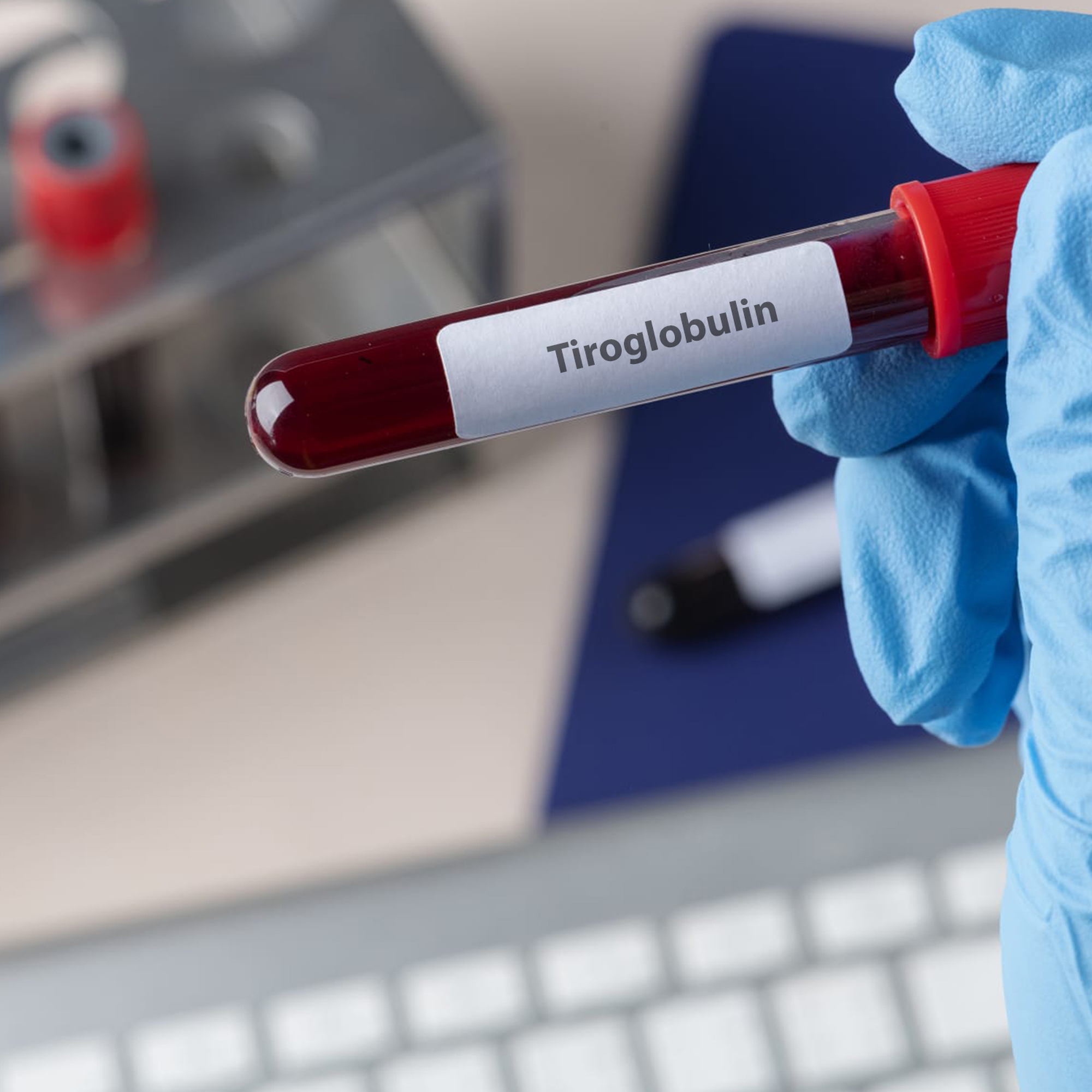
Tiroglobulin
Tiroglobulin is a large protein molecule produced in the thyroid gland. This protein plays a critical role in the production of thyroid hormones triiodothyronine (T3) and thyroxine (T4). Synthesized by the follicular cells in the thyroid gland, tiroglobulin is the building block of thyroid hormones. Tiroglobulin is stored within thyroid follicles (the primary cell structures in the thyroid gland) and is later used to convert into T3 and T4 hormones when needed. It is a crucial step in the production of thyroid hormones and essential for their normal levels in the body. Additionally, tiroglobulin can be used as a marker in the diagnosis and monitoring of certain thyroid disorders. Specifically, tiroglobulin levels are monitored in thyroid cancer diagnosis and post-treatment follow-ups. Elevated tiroglobulin levels after treatment may indicate the presence of cancer cells or remaining thyroid tissue. Tiroglobulin levels serve as a test used to evaluate the normal function of the thyroid gland or, in some cases, thyroid disorders. This test can be used to assess the recurrence of tumors or the health of the thyroid gland in individuals with thyroid cancer. However, tiroglobulin levels are usually evaluated alongside other thyroid hormone tests, and clinical evaluation by a doctor is necessary.
What is the Tiroglobulin Test?
The Tiroglobulin test is a medical test used in thyroid cancer monitoring, measuring the levels of tiroglobulin in a blood sample. This test helps in monitoring the recurrence of tumors after treatment by determining the amount of tiroglobulin released from the surgically removed thyroid tissue.
When is the Tiroglobulin Test Requested?
1. Thyroid Cancer Monitoring:
Tiroglobulin levels released from surgically removed thyroid tissue are monitored in individuals undergoing thyroid cancer treatment. This can help determine if cancer cells are regrowing or spreading.
2. Thyroid Cancer Diagnosis and Treatment:
It can be used to assess the size of tumors in individuals suspected of having thyroid cancer or diagnosed with it, monitor treatment effectiveness, and determine tumor recurrence post-surgery.
3. Anomalies in Thyroid Functions:
Some thyroid disorders, especially autoimmune thyroid diseases (such as Hashimoto's thyroiditis), may use the tiroglobulin test to monitor changes in thyroid functions.
What is Tiroglobulin Level?
Tiroglobulin level refers to the measured amount of tiroglobulin, a protein produced in the thyroid gland and present in the bloodstream. Under normal conditions, tiroglobulin levels are low in blood samples.
Tiroglobulin levels are significant in cases like thyroid cancer monitoring and post-treatment evaluations. In individuals undergoing treatment for thyroid cancer, the amount of tiroglobulin released from the surgically removed thyroid tissue is tracked. Normally, tiroglobulin levels should be very low or undetectable after complete tumor removal. However, elevated tiroglobulin levels may indicate post-surgical tumor regrowth or spreading.