

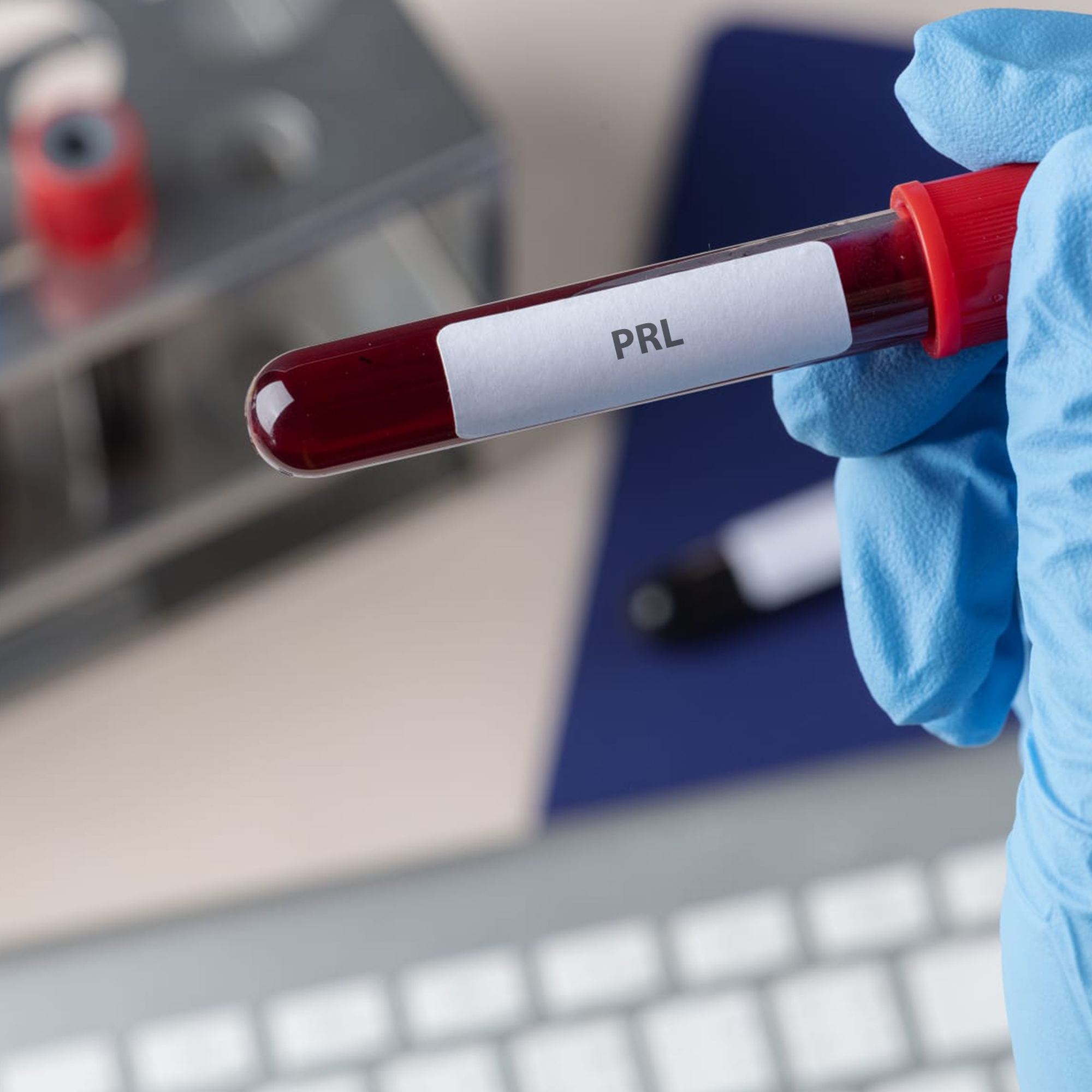
Prolactin (PRL)
Prolactin (PRL) is an important hormone generally secreted from the pituitary gland. Its most well-known function is to support lactation, meaning it has an effect on the enlargement of mammary glands and increased milk production during the breastfeeding period. However, prolactin isn't solely related to lactation. It has various effects on the body.
Prolactin plays a role in numerous physiological processes such as sexual functions, fertility, and regulation of the immune system. Moreover, it can also impact emotional and behavioral processes by influencing the release of other chemicals like dopamine in certain areas of the brain. The levels of this hormone can change in both women and men due to factors such as pregnancy, breastfeeding, stress, sleep deprivation, and nipple stimulation. These hormone levels, found in both genders, can be measured to investigate and evaluate various conditions, such as fertility issues, menstrual cycle abnormalities, and the detection of tumors in the pituitary gland, such as prolactinomas.
What Is the Prolactin (PRL) Test?
The Prolactin (PRL) test is a medical examination aimed at measuring prolactin levels in the body. Typically conducted by taking a blood sample, this test helps evaluate hormonal balance by determining the levels of prolactin hormone secreted by the pituitary gland. The PRL test can be used for examining conditions such as breastfeeding, fertility issues, and pituitary tumors to aid in diagnosis.
When Is the Prolactin (PRL) Test Requested?
1. Breastfeeding Issues:
Investigating prolactin levels in women experiencing problems with breast milk production during the breastfeeding process.
2. Fertility Problems:
Examining prolactin levels in women to understand ovulation disorders caused by either low or excessively high prolactin levels related to fertility.
3. Menstrual Cycle Issues:
Testing prolactin levels to determine the causes of menstrual irregularities, excessive bleeding, or abnormalities in the menstrual cycle.
4. Pituitary Gland Disorders:
Assessing prolactin levels to detect pituitary gland tumors or abnormalities in this gland.
5. Galactorrhea:
Requesting a prolactin test to investigate the cause if fluid resembling milk comes from the nipple.
6. Libido Problems:
Checking prolactin levels to evaluate hormonal balance in cases of sexual desire-related issues and lack of libido.
7. Hypothalamus and Pituitary Disorders:
Evaluating the functions of the hypothalamus and pituitary gland and investigating the causes of hormonal imbalances.
The Importance of the Prolactin (PRL) Test in Men?
The Prolactin (PRL) test in men is usually requested in exceptional cases. Prolactin, typically known as a hormone responsible for breastfeeding and pregnancy-related milk production in women, can also be measured in men in certain situations:
1. Pituitary Gland Issues:
Checking prolactin levels to determine abnormalities in this gland, such as a tumor (prolactinoma) in the pituitary gland.
2. Sexual Dysfunction:
Investigating abnormal increases in prolactin levels that might lead to sexual dysfunction, especially erectile problems (erectile dysfunction), by assessing hormonal balance.
3. Infertility:
Measuring prolactin levels in cases of infertility in men to evaluate hormonal balance.
4. Libido Issues:
Requesting the PRL test in cases of decreased sexual desire or loss of libido to evaluate hormonal balance.
These situations are generally exceptional, and the PRL test is not routinely requested in men. Usually, a doctor might prefer to check prolactin levels as part of understanding the underlying cause of specific symptoms or signs related to hormonal balance. However, PRL test results are generally evaluated in conjunction with other clinical findings to plan treatment accordingly.
The Importance of the Prolactin (PRL) Test in Women?
The Prolactin (PRL) test can be an essential tool in evaluating various conditions in women. PRL, especially a hormone responsible for milk production during breastfeeding, also plays a role in determining various health conditions in women.
1. Fertility Issues:
Examining prolactin levels in women with fertility (fertility) problems to evaluate hormonal balance.
2. Menstrual Irregularities:
Testing prolactin levels in cases of menstrual cycle issues such as absence or irregularity of periods to evaluate hormonal balance.
3. Milk Production:
Examining prolactin levels if there is an abnormal increase or decrease in milk production after childbirth. High prolactin levels can increase milk production.
4. Pituitary Gland Issues:
Detecting a tumor (prolactinoma) or other abnormalities in the pituitary gland through the PRL test. In this situation, symptoms like headaches, vision problems, and hormonal imbalances might be observed.
5. Menopause Symptoms:
Hormonal changes occur during the menopause process, and some symptoms might arise. PRL levels can be tested to evaluate hormonal balance.
The PRL test is important in detecting high or low prolactin levels to understand the underlying causes and determine appropriate treatment. However, since each patient is different, test results and their interpretation are generally carried out by a doctor considering the patient's overall health condition and symptoms.