

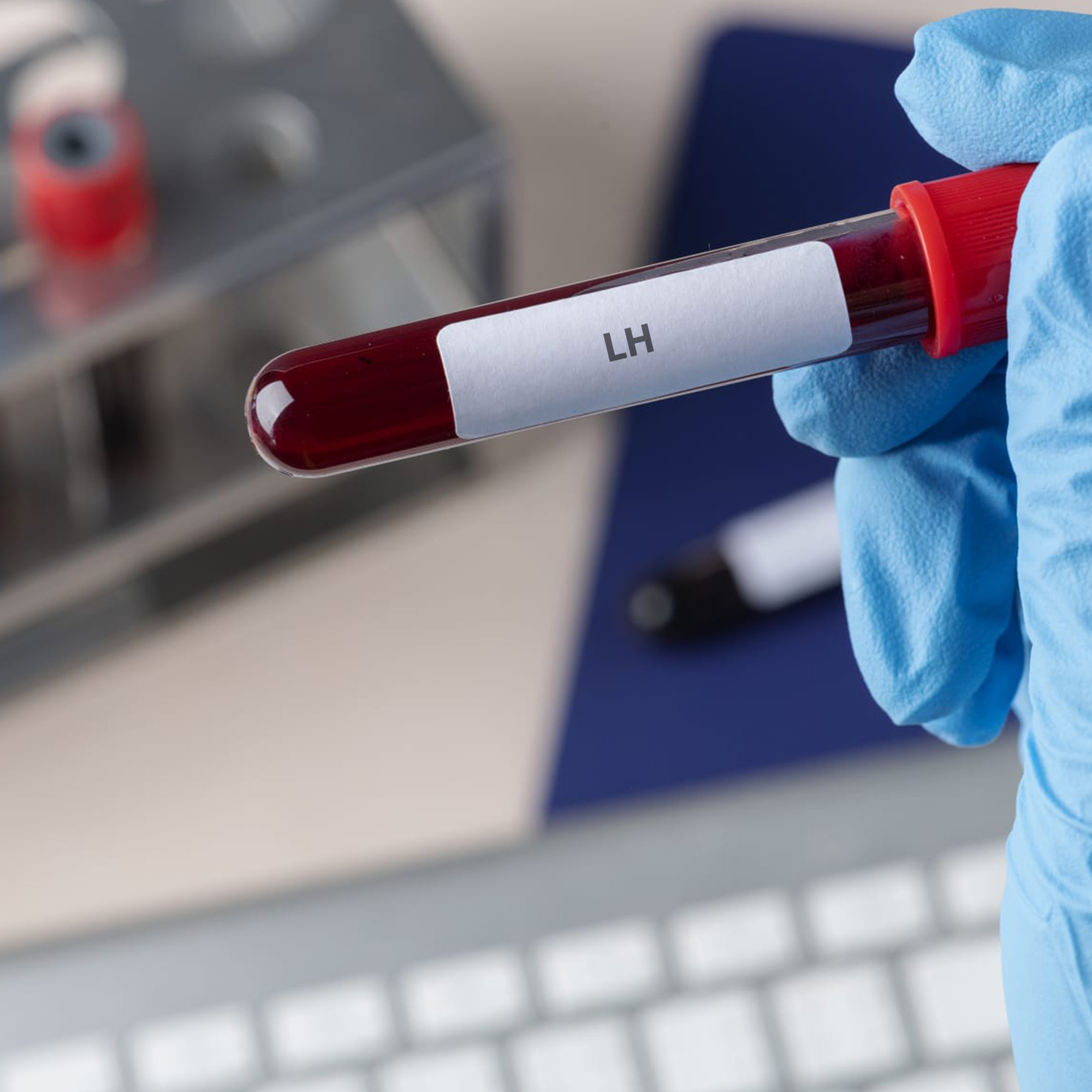
Luteinizing Hormone (LH)
Luteinizing Hormone (LH) is a pituitary hormone produced in both women and men. Secreted by the pituitary gland, LH plays a significant role in regulating the reproductive system and sexual functions.
In women, LH is secreted in varying amounts at different stages of the menstrual cycle. Low levels of LH begin to rise from the start of the menstrual cycle and typically trigger the maturation of a follicle (egg sac) in the ovaries and the release of the egg (ovulation). After ovulation occurs, LH levels generally peak. If pregnancy does not happen, LH levels start to decrease, marking the transition to a new phase of the menstrual cycle.
In men, LH stimulates the Leydig cells in the testes, promoting the production of testosterone. This hormone is crucial for sperm production and sexual functions in men.
LH levels can be influenced by various factors such as stress, exercise, sleep, sexual activity, certain medications, and hormonal conditions.
The measurement of LH levels is typically used to evaluate reproductive health issues and hormonal balance. In women, it can be measured for examining the menstrual cycle, ovulation disorders, polycystic ovary syndrome (PCOS), whereas in men, it can be evaluated for infertility and hormonal balance. However, interpreting LH levels is usually done by a doctor considering the patient's specific condition and symptoms.
What is Luteinizing Hormone (LH) Test?
The LH test is a medical test conducted to measure luteinizing hormone levels in the body. This test is usually performed by taking a blood sample. LH, being a hormone associated with the reproductive system, exhibits changes during different stages of the menstrual cycle in women. The LH test is used for conditions such as examining reproductive health issues, menstrual irregularities, ovulation disorders, and evaluating hormonal balance.
When is LH Test Requested?
1. Menstrual Cycle Issues:
LH levels may be examined for hormonal balance in cases of menstrual irregularities or absence of periods.
2. Fertility Issues:
In women experiencing fertility problems, low LH levels or abnormalities in LH levels can be assessed to understand the cause of ovulation disorders.
3. Ovulation Tracking:
LH levels can be monitored in women to determine ovulation times. This process can be used to increase natural pregnancy chances or for assisted reproductive technologies (such as IVF) monitoring.
4. Early or Late Puberty:
LH testing can be conducted to monitor puberty in adolescents.
5. Pituitary Gland Disorders:
LH levels can be evaluated for conditions related to the pituitary gland or abnormalities in hormone secretion.
6. Sexual Development Issues:
LH testing may be requested to understand the causes of abnormalities in sexual development.
What is the Importance of LH Test in Women?
1. Ovulation Tracking:
LH plays a significant role in ovulation (egg release) in women. LH levels rise at specific times in a woman's fertility cycle. Elevated LH levels during ovulation indicate a sign for the release of the egg. Therefore, LH levels can be monitored for ovulation tracking or increasing natural pregnancy chances.
2. Fertility Issues:
Abnormalities in LH levels can be evaluated to understand the cause of fertility problems. Low LH levels or changes in LH/FSH (Follicle Stimulating Hormone) ratio can indicate ovulation disorders or fertility issues.
3. Menstrual Irregularities:
LH levels can be examined to determine the causes of menstrual cycle abnormalities. Menstrual irregularities, absence of periods, or excessive bleeding can be assessed as part of hormonal balance.
4. Polycystic Ovary Syndrome (PCOS):
Increased LH levels or hormonal imbalances can be evaluated during the diagnosis of conditions like PCOS.
5. Assisted Reproductive Technologies (IVF, etc.):
LH levels can be a parameter monitored during assisted reproductive technologies (such as IVF). Hormonal adjustments can be made to optimize the ovulation process in these technologies.