

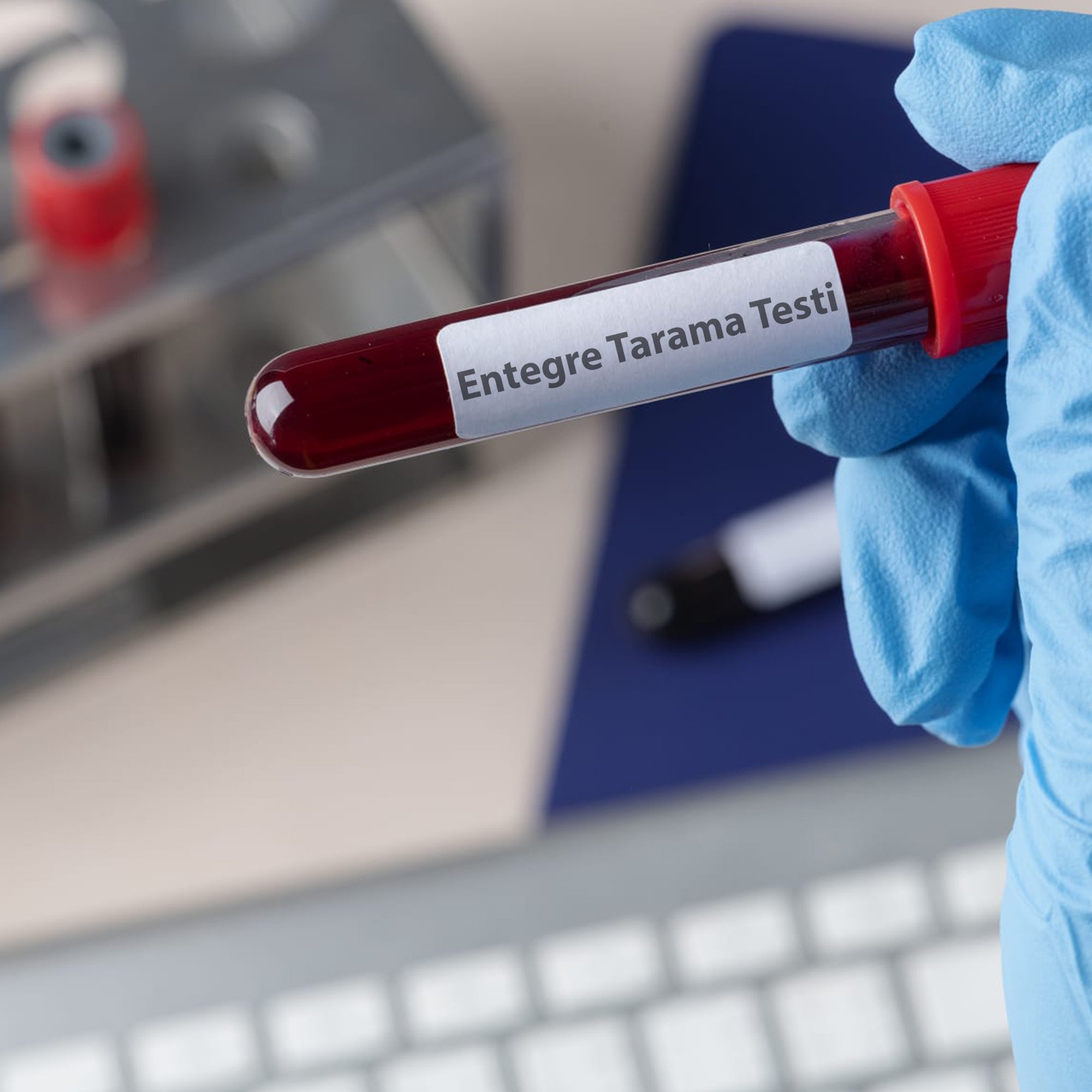
Integrated Screening Test
The integrated screening test is a test conducted during pregnancy and is generally used to assess Down syndrome and other genetic abnormalities in the fetus. This test helps evaluate the risks during pregnancy by measuring specific hormone and protein levels in the expectant mother's blood.
How is the Integrated Screening Test Performed?
1. First Blood Test:
During the early stages of pregnancy, typically between 10 to 13 weeks, the expectant mother's blood is drawn.
This blood test measures levels of specific proteins such as free beta-human chorionic gonadotropin (beta-hCG) and pregnancy-associated plasma protein-A (PAPP-A).
These measurements conducted in the laboratory help assess the risk of Down syndrome during pregnancy.
2. Ultrasound Examination:
Usually between the 11th and 14th weeks of pregnancy, an ultrasound examination is performed.
This ultrasound measures the thickness of the fetus's nuchal fold. Increased thickness may indicate an increased risk of Down syndrome.
3. Second Blood Test:
Between the 15th and 20th weeks of pregnancy, a second blood test is conducted.
This test measures certain proteins and hormone levels in the expectant mother's blood.
The results obtained from these three stages are compiled and evaluated together. The measurements are used to assess risks such as Down syndrome and other genetic abnormalities. Typically, this test provides a risk value, and for pregnancies deemed high risk, further detailed examinations or advanced tests might be recommended. It is crucial to remember that these tests are used not for definitive diagnosis but rather to identify potential risks.
What is the Risk of the Integrated Screening Test?
The integrated screening test primarily aims to determine the risk of genetic anomalies such as Down syndrome. The test result is presented as a risk level.
Test results are usually expressed as a specific risk level, such as high or low risk. This risk level is typically determined based on the expectant mother's age, hormone or protein levels in the test results, findings from the ultrasound examination, and sometimes the family history.
However, it's crucial to note that the integrated screening test is used to identify potential risks, not to diagnose conditions definitively. Therefore, obtaining a high-risk result does not necessarily mean that the baby has these abnormalities; it merely indicates a possibility, necessitating further investigation or advanced tests.
In conclusion, the results of the integrated screening test are presented as a risk level, serving as a guide for further evaluation or advanced tests. However, it's important to remember that these results are not for definitive diagnosis but to identify potential risks. Therefore, it's essential to discuss the results with a specialist doctor or genetic counselor for evaluation and guidance.