

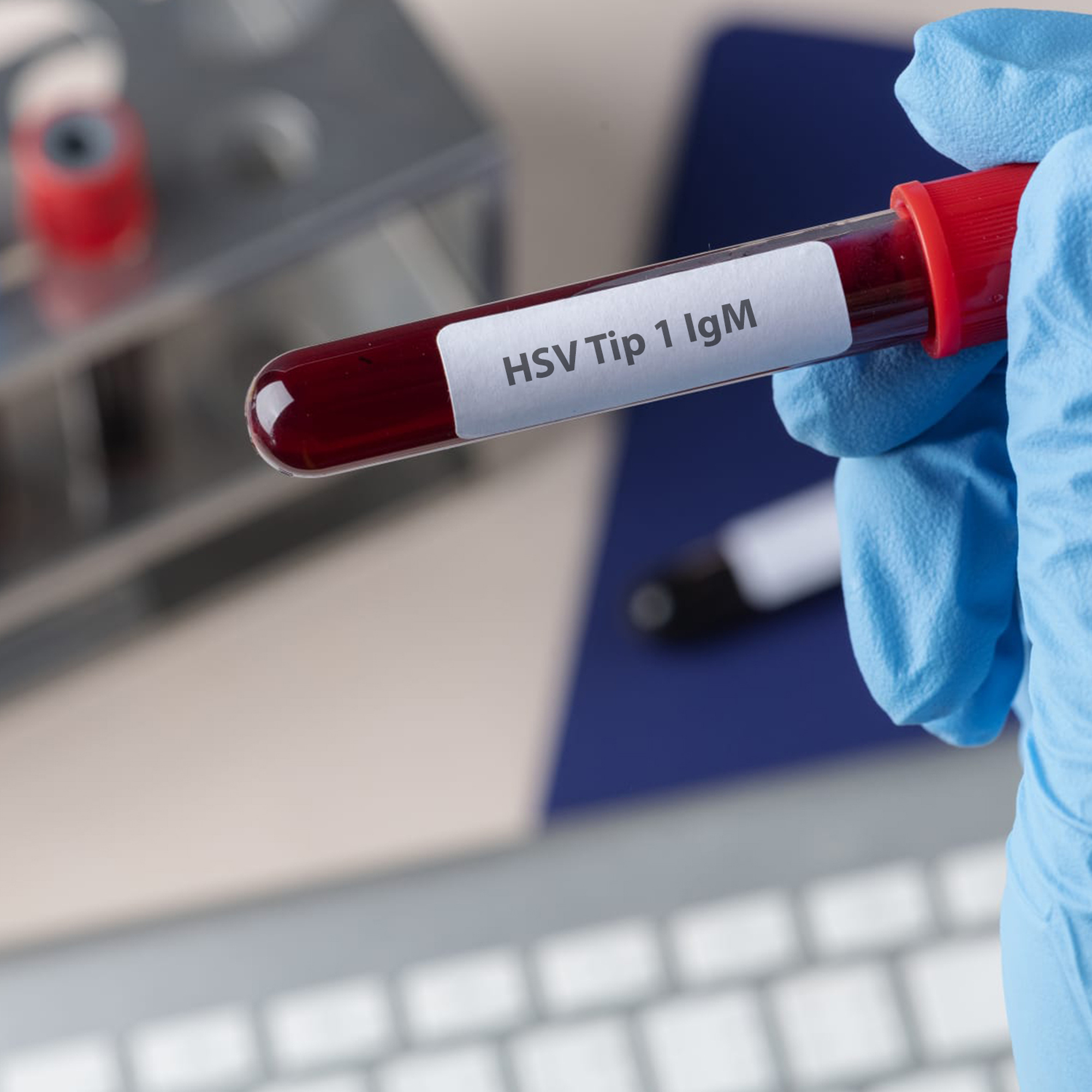
Hsv Type 1 IgM
HSV-1 IgM test is a blood test that investigates the IgM antibodies in the body against Herpes Simplex Virus Type 1 (HSV-1) infection. HSV-1 is commonly known to cause oral cold sores and is frequently transmitted through oral contact. IgM antibodies are typically produced shortly after the symptoms of a new infection appear and can be found in high levels during acute infection periods. The HSV-1 IgM test is used to determine whether an individual has recently developed an infection with HSV-1. However, HSV IgM tests can sometimes be misleading, and there are debates about their reliability. In some cases, they might give false-positive results or may not detect a previous HSV-1 infection. Therefore, the HSV-1 IgM test should not be solely relied upon for diagnosis. Typically, it is evaluated along with clinical symptoms, other tests, and the presence of symptoms. Among the more reliable tests for the diagnosis of HSV-1 infection is the HSV-1 IgG antibody test. This test investigates IgG antibodies in the body against HSV-1, indicating a longer-term immunity and providing more accurate results.
What is the HSV-1 IgM Test?
The HSV-1 IgM test is a blood test that investigates the IgM antibodies in the body against Herpes Simplex Virus Type 1 (HSV-1) infection. This test helps determine if a person has been recently exposed to HSV-1. IgM antibodies produced shortly after the onset of new infection symptoms are examined. However, this test can sometimes be misleading and is not sufficient alone to make a definite diagnosis. It is generally evaluated along with symptoms, clinical signs, and other test results.
When is the HSV-1 IgM Test Requested?
1. Specific Symptoms:
Especially in individuals showing symptoms such as cold sores, oral lesions, or blisters around the mouth, it can be requested to diagnose HSV-1 infection.
2. Signs of New Infection:
In individuals suspected of having a new HSV-1 infection, the test can be requested a few weeks after the onset of symptoms.
3. Pregnancy Situation:
For screening for HSV-1 infection in expectant mothers during pregnancy or before childbirth, it can be requested.
4. Risk of Transmission Through Sexual Contact:
This virus can sometimes be transmitted through sexual contact. Therefore, the test might be requested for individuals at risk of sexually transmitted infection.
5. Asymptomatic Conditions:
In some individuals, the infection might be asymptomatic or the symptoms might be mild. In such cases, the test can be requested to determine the presence of infection.
However, there are limitations to the accuracy of the HSV-1 IgM test, and it is not sufficient alone for a definitive diagnosis. Test results are generally evaluated along with symptoms, clinical signs, and other test results.
What are the Symptoms of HSV-1 IgM?
The HSV-1 IgM test is a blood test that investigates the IgM antibodies in the body against Herpes Simplex Virus Type 1 (HSV-1) infection. HSV-1 typically causes cold sores or blisters around the mouth and lips. This virus can be transmitted through the oral route and usually causes noticeable symptoms in most infected individuals. The HSV-1 IgM test is used to show the presence of a new infection; however, there are limitations to the accuracy and reliability of the test.
Symptoms of HSV-1 infection may include:
1. Cold Sores (Fever Blisters):
Lesions, blisters, or sores filled with fluid appearing around the mouth and lips are often a clear indicator of this infection.
2. Pain Around the Mouth:
Pain and discomfort around the mouth accompanying cold sores.
3. Itching and Burning:
Itching or burning sensations in the area where cold sores develop.
4. Fever and Fatigue:
In some cases, mild fever, fatigue, or general body aches might accompany the infection.
These symptoms typically manifest as a result of the infection. However, some individuals may be infected but not experience symptoms, or their symptoms might be mild. While these symptoms are often seen as a result of HSV Type 1 infection, relying on test results and assessment by a healthcare professional is essential for a definite diagnosis.