

5 soruda hepatit
Hepatit hala milyonlarca insanı etkileyen ciddi bir sağlık sorunu… Öyle ki her yıl dünyada 1 milyonu aşkın kişi hepatit virüslerinin sebep olduğu çeşitli hastalıklar yüzünden yaşamını yitiriyor. Bu denli önemli bir sağlık sorunu olan hepatitle ilgili merak edilenler haberimizde…
Her yıl 1 milyonu aşkın insan hepatit virüsü kaynaklı çeşitli hastalıklar yüzünden hayatını kaybediyor. Dünyada 350 milyon insanı etkileyen hepatit hala ciddiyetini koruyan önemli bir sağlık sorunu…
Dünya Sağlık Örgütü’nün (DSÖ) 2024 Küresel Hepatit Raporu’na göre, virüs kaynaklı hepatit nedeniyle kaybedilen hayatların sayısı her geçen gün artıyor. Öyle ki hepatit, dünyada bulaşıcı hastalıklar nedeniyle meydana gelen ölümlerde ikinci sırada yer alıyor. 187 ülkeden alınan veriler, virüs kaynaklı hepatitten kaynaklanan tahmini ölüm sayısının 2022’de 1,3 milyona çıktığını gösteriyor. Nitekim Hepatit B ve C enfeksiyonları nedeniyle dünya çapında 3 bin 500 kişi yaşamını yitirirken 6 binden fazla kişiye yeni virüs kaynaklı hepatit bulaşıyor.
DSÖ raporlarında, 2022 yılında 254 milyon kişinin hepatit B ve 50 milyon kişinin hepatit C ile yaşadığı tahmin ediliyor. Türkiye’de yapılan bir çalışma ise 18 yaş üstü her üç kişiden birinin Hepatit B virüsü ile karşılaştığını ortaya koyuyor.
Bu kadar önemli bir sağlık sorunu olan hepatitle ilgili farkındalığı artırmak amacıyla her yıl 28 Temmuz “Dünya Hepatit Günü” ilan edilerek toplumu bilinçlendirmek çeşitli çalışmalar yapılıyor. Biz de bu özel gün için Marmara Üniversitesi Pendik Eğitim ve Araştırma Hastanesi Gastroenteroloji Bilim Dalı Öğretim Üyesi Doç. Dr. Coşkun Özer Demirtaş’la hepatitle ilgili merak edilenlere yanıt aradık.
1. Hepatit nedir?
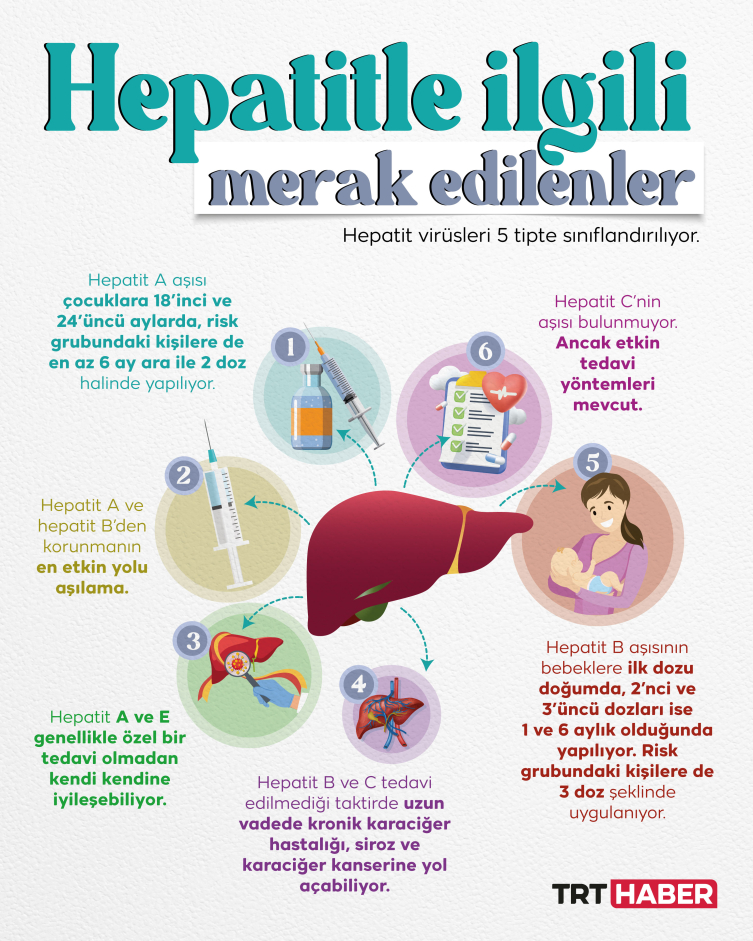
Hepatit karaciğerin iltihaplanması anlamına geliyor. Hepatit hastalığına virüsler, alkol, ilaç gibi sebepler yol açıyor. Hepatit virüsleri klasik olarak 5 tipte sınıflandırılıyor. Bunlardan en çok hepatit A, B ve C virüs enfeksiyonları görülüyor. Hepatit D ve E enfeksiyonlarına ise daha nadiren rastlanıyor.
2. Hangi hepatit türü hangi yollarla bulaşıyor?
Hepatit A ve E, virüsle kontamine olmuş (bulaşmış) su ve yiyeceklerin tüketilmesiyle, hepatit B ve C ise kan yolu, vücut sıvıları veya cinsel yolla bulaşıyor. Yeterli sterilizasyon önlemleri alınmaması durumunda vücuda yapılan her türlü girişimsel işlem, dövme, piercing, manikür, pedikür, diş operasyonları gibi işlemler de Hepatit B ve C enfeksiyonlarının bulaşmasına neden oluyor.
3. Hepatitten korunma yolları neler?
Hepatit A ve B enfeksiyonundan aşı ile korunmak mümkün. Türkiye’de tüm yenidoğanlara 0, 1 ve 6’ncı ayda hepatit B aşısı rutin olarak uygulanıyor. Bu zorunlu aşılama programı sayesinde 2030 yılı itibariyle hepatit B enfeksiyon sıklığının belirgin olarak azalacağı öngörülüyor. Hepatit A aşısı ise 18 ve 24’üncü ayda 2 doz olarak uygulanıyor. Bu virüslere karşı test sonucunda bağışıklığı bulunmadığı tespit edilen yetişkin ve çocuklarda da aynı şema ile aşılama uygulanıyor. Diğer hepatit tipleri için ise bir aşı uygulaması bulunmuyor.
Özellikle ciddi sağlık problemlerine yol açabilen hepatit B ve C enfeksiyonlarını tanınması, toplumda farkındalığının arttırılması ve hepatit test sayısının arttırılması korunmak için önemli. Yine test sonuçlarına göre enfekte olmayan kişilerin aşılanması, enfekte olan kişilerin tedavi erişiminin kolaylaştırılması, yenidoğanların aşı ile bağışıklığının arttırılması, anneden bebeğe geçişlerin önlenmesi, güvenli kan ürünlerinin kullanımı ve her türlü girişimsel işlemde sterilizasyona özen gösterilmesi de en önemli korunma stratejileri arasında yer alıyor.
Hepatit A ve E enfeksiyonundan korunmada ise genel ve el hijyenine dikkat edilmesi, içme sularının ve havuz sularının temizliğine özen gösterilmesi gerekiyor.
4. Hepatit açısından kimler risk grubunda yer alıyor?
Başta sağlık ve laboratuvar çalışanları, sık sık kan ve kan ürünleri transfüzyonu yapılanlar, damar içi madde bağımlıları, hemodiyaliz hastaları, herhangi bir karaciğer hastalığı bulunan kişiler risk grubunda yer alıyor.
5. Hepatit tedavi edilebiliyor mu?
Hepatit A ve E enfeksiyonları genellikle özel bir tedavi olmadan kendi kendine iyileşebiliyor ve karaciğerde herhangi bir hasar bırakmadan, kronikleşmeden vücuttan atılabiliyor.
Hepatit B ve C enfeksiyonları ise kronikleşebiliyor. Hatta ileri aşamalarda karaciğerde siroz ve kansere yol açabiliyor. Hepatit B için günde bir adet ağızdan hap tedavisi ile hastaların hemen hepsinde virüsü tamamen baskılayarak, siroz ve karaciğer kanser riski belirgin olarak azaltılabiliyor.
Hepatit C enfeksiyonu için ise, 2016’dan beri ülkemizde de bulunan yeni nesil ağızdan alınan ilaç seçenekleri ile 8-12 haftalık tedavi sonrasında hastaların tamamında virüs vücuttan temizlenebiliyor. Türkiye’de sirozun, karaciğer kanserinin ve karaciğer naklinin halen en sık sebebi olan hepatit B ve C virüs enfeksiyonlarını erken tanımak, siroz ve karaciğer kanseri gibi ciddi sağlık problemlerine yol açmadan tedavi etmek hayati önem taşıyor.
KAYNAK : TRT HABER