

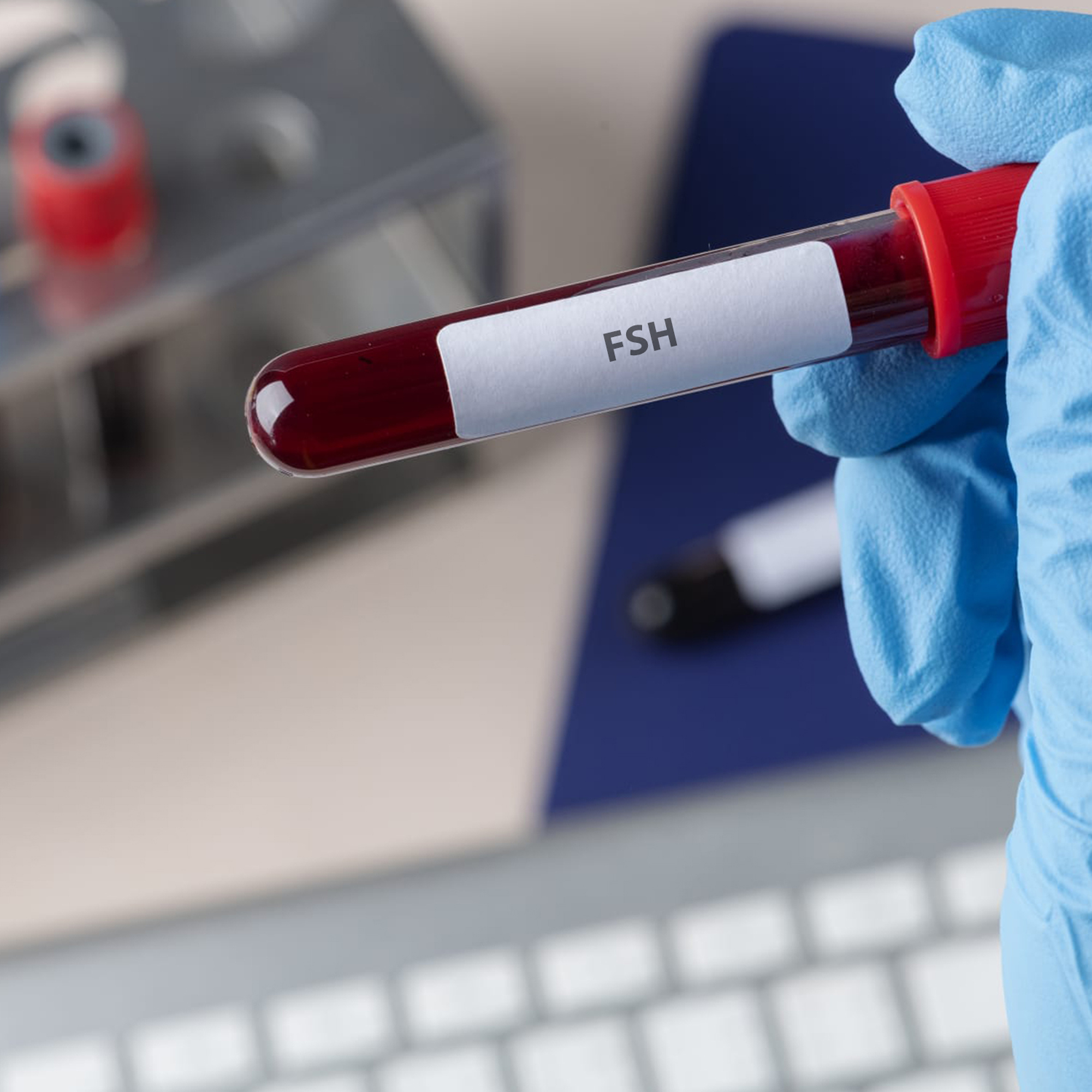
FSH
Follicle-stimulating hormone (FSH) is a hormone secreted by the pituitary gland and plays a significant role in regulating the reproductive system. FSH is present in both males and females and has an effect on the reproductive organs.
In women, FSH stimulates the growth and maturation of follicles in the ovaries. At the beginning of the menstrual cycle, FSH levels increase and stimulate the follicles in the ovaries. It triggers estrogen production as the follicle matures. Together, these hormones prepare the ovaries and facilitate the necessary steps for ovulation (the release of an egg).
In men, FSH stimulates the Sertoli cells in the testes, supporting sperm production and regulating this process. It also plays a role in the production of testosterone.
FSH levels can be used to evaluate reproductive health issues and identify fertility problems. FSH levels can be measured in cases of ovulation disorders, early or delayed puberty, polycystic ovary syndrome (PCOS) in women, as well as infertility and hormonal imbalances in men. However, the interpretation of FSH levels is typically done by a doctor based on the patient's condition.
What Is the FSH Test?
FSH, which stands for Follicle-Stimulating Hormone, is a medical test used to measure the levels of FSH hormone in the body. This test is usually performed by collecting a blood sample. FSH plays a significant role in the reproductive system: it promotes the maturation of eggs in women and supports sperm production in men. The FSH test can be used to understand fertility issues, menstrual cycle irregularities, male infertility conditions, and assess hormonal balance. A doctor may request this test to evaluate specific reproductive or hormonal conditions.
When Is the FSH Test Ordered?
1. Fertility Problems:
Abnormalities in FSH levels can be evaluated to understand fertility problems in both men and women. Low FSH levels in women may indicate a lack of initiation or normal development of eggs. In men, low FSH levels may suggest issues with sperm production.
2. Menstrual Cycle Issues:
FSH levels can be examined in cases of menstrual cycle problems, especially irregular or absent periods, as part of evaluating hormonal balance.
3. Early or Delayed Puberty:
FSH tests can be conducted in adolescents to identify abnormalities in sexual development and monitor this process.
4. Menopausal Symptoms:
In women going through menopause, FSH levels can be examined to understand symptoms caused by hormonal changes. Elevated FSH levels may indicate a decrease in ovarian reserve or approaching menopause.
5. Pituitary Gland Disorders:
FSH levels can be assessed due to abnormalities in the pituitary gland or changes in hormone secretion.
6. Polycystic Ovary Syndrome (PCOS):
FSH levels can be examined to evaluate hormonal imbalances in conditions like PCOS.
7. Assisted Reproductive Technologies (IVF, etc.):
During assisted reproduction techniques (e.g., in vitro fertilization - IVF), FSH levels can be monitored for ovarian stimulation and to track the ovulation process.