

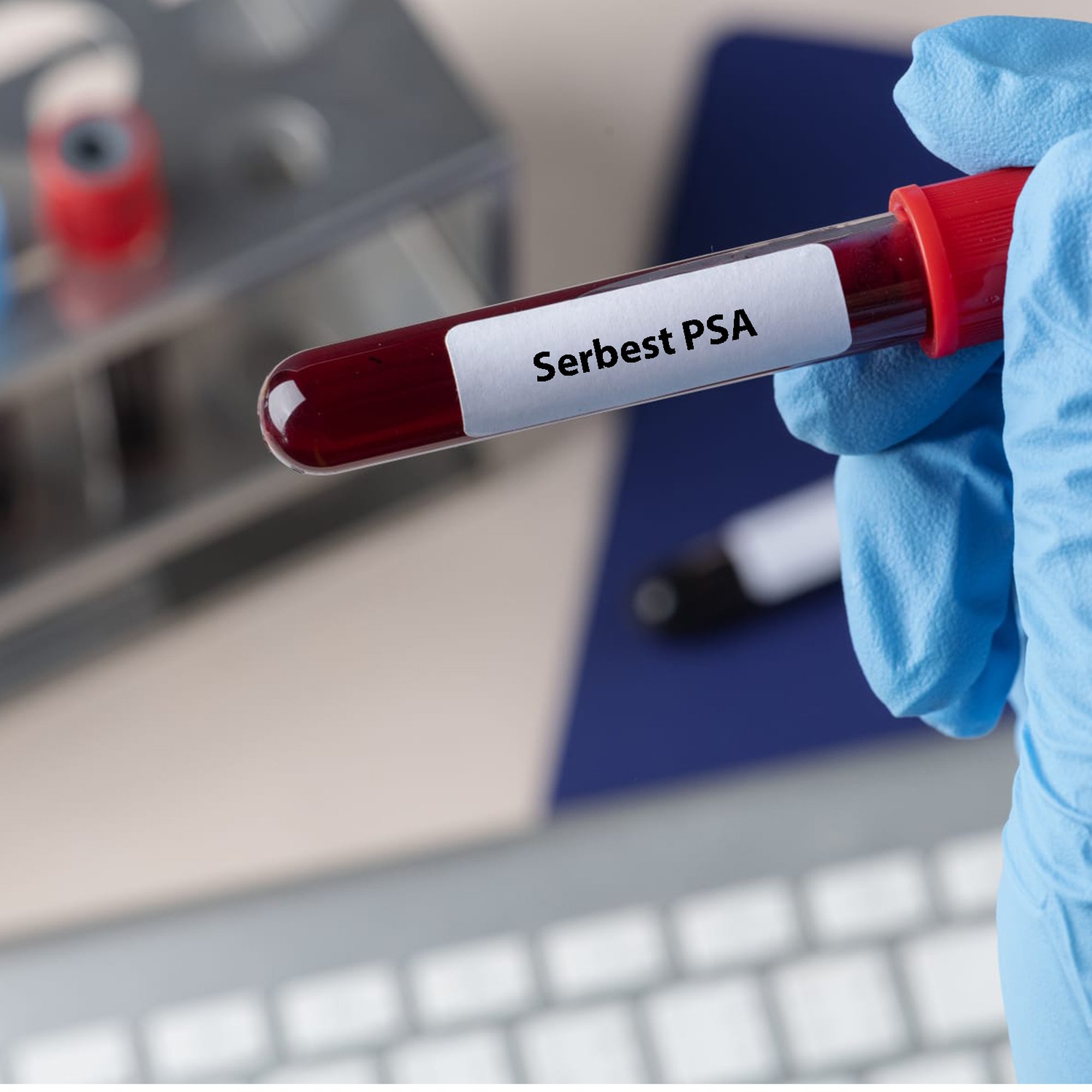
Free PSA
Free PSA (Prostate-Specific Antigen) is a blood test that measures a protein produced in the prostate gland. It is used as a screening test for conditions like prostate cancer. PSA is typically produced in the prostate gland and is found in the fluid part of semen. The level of free PSA in the blood is a component of the total PSA level. While a high level of free PSA might indicate a lower risk of prostate cancer, a low level might suggest a higher risk. However, the results of this test are usually evaluated in conjunction with other factors and are not used alone for making a cancer diagnosis. Elevated levels of free PSA may require further tests and examinations if there's suspicion of prostate cancer. Hence, the free PSA test can be helpful in assessing the risk of prostate cancer but is not sufficient alone to confirm a diagnosis.
What is the Free PSA Test?
The Free PSA (Prostate-Specific Antigen) test is a blood test used in prostate cancer screening. It measures the amount of free PSA circulating in the bloodstream, released from the prostate gland. A high level of free PSA typically indicates a lower risk of prostate cancer. However, it is not used alone to make a definitive diagnosis and should be assessed in conjunction with other factors.
When is the Free PSA Test Ordered?
1. Prostate Cancer Screening:
It might be ordered for men in low-risk groups or those with low PSA levels to assess the likelihood of prostate cancer.
2. Evaluation of Prostate Issues:
It can assist in evaluating conditions related to the prostate, such as urination problems or prostate enlargement (benign prostatic hyperplasia - BPH).
3. Pre-Biopsy Assessment:
In cases where a biopsy is necessary, free PSA levels can help assess the risk. Elevated free PSA levels might indicate the need for a biopsy.
4. Monitoring Prostate Cancer:
It can be used to evaluate treatment responses in individuals diagnosed with prostate cancer and monitor free PSA levels post-treatment.
What is Elevated Free PSA?
A high level of free PSA generally indicates a lower risk of prostate cancer. In non-cancerous conditions, cells in the prostate gland typically produce more free PSA. Therefore, high levels of free PSA might indicate the presence of non-cancerous prostate growth (benign prostatic hyperplasia - BPH) or a low-risk possibility of prostate cancer. However, elevated free PSA levels don't always indicate a low cancer risk. In some cases of prostate cancer, free PSA levels can be high. Consequently, the results of free PSA tests alone do not definitively confirm the presence of prostate cancer. Other factors, such as overall health status, total PSA levels, results from digital rectal exams, and if necessary, biopsies, need to be evaluated together. The best person to interpret these results is a healthcare professional who requested or assessed the results of these tests.