

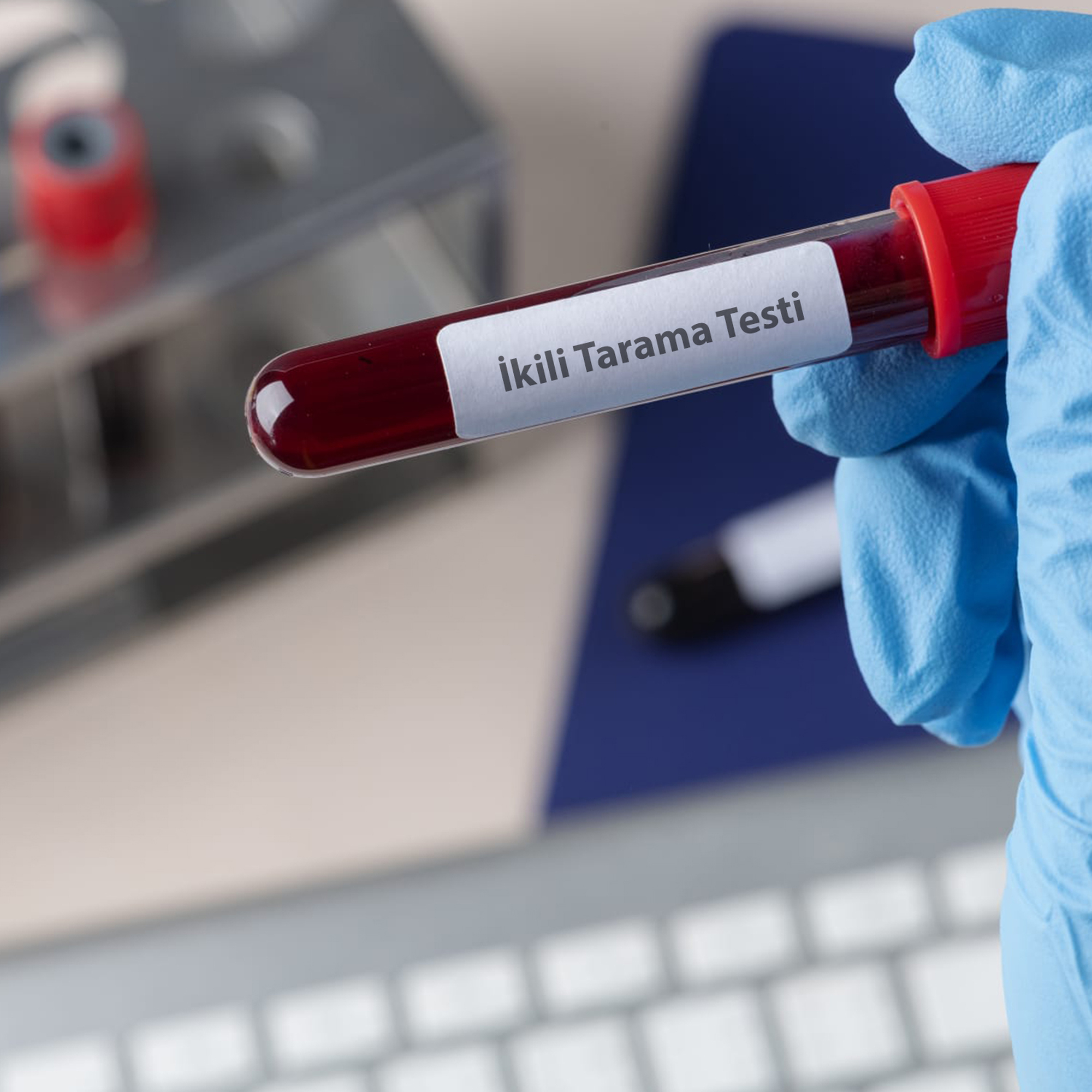
11-14 Week Screening Test (Double Test) What Is It?
The 11-14 week screening test is a screening test performed between the 11th and 14th weeks of pregnancy to assess genetic abnormalities. This test usually involves two components: ultrasound scanning and a blood test.
The double test involves the measurement of the baby's nuchal translucency and the assessment of specific protein and hormone levels in the mother's blood. The nuchal translucency measurement is typically done using ultrasound, while the blood test checks for specific proteins (for example, PAPP-A - Pregnancy-Associated Plasma Protein-A) and hormones (for example, beta-hCG - Beta-human chorionic gonadotropin) in the pregnant woman's blood.
The double test is used to assess the risk of genetic abnormalities such as Down syndrome and Trisomy 18. However, it does not provide a definitive diagnosis but rather identifies potential risks. If this screening test yields high-risk results, further tests or examinations may be recommended. At this stage, it is advisable to evaluate the results with a specialist doctor or genetic counselor.
How Is the 11-14 Week Screening Test (Double Test) Conducted?
1. Ultrasound Scan:
Measurement of Nuchal Translucency:
Between the 11th and 14th weeks of pregnancy, the baby's nuchal translucency is measured using an ultrasound device.
2. Blood Test:
Blood Sample Collection:
A blood sample is taken from the expectant mother. This is usually done shortly after the ultrasound scan or within the same day.
Measurement of Protein and Hormone Levels:
A blood test conducted in the laboratory measures the levels of specific proteins (e.g., PAPP-A) and hormones (e.g., beta-hCG) in the mother's blood.
These two stages are usually performed during the same period, and the results are combined to evaluate the potential risk of genetic abnormalities. The nuchal translucency measurement and the results of the blood test are generally evaluated together to assess the risk. If a high-risk situation is identified, further tests or examinations may be suggested. In such cases, it is essential to assess the results with a specialist doctor or genetic counselor.
What Is the Risk of the 11-14 Week Screening Test (Double Test)?
The 11-14 week screening test primarily aims to determine the risk of genetic abnormalities, particularly Down syndrome. This test is conducted by evaluating the results of both the ultrasound scan and the blood test. As a result of this evaluation, a high-risk situation may be identified.
A high-risk result often requires further examinations or advanced tests. However, it's important to note that this test is not conducted to provide a definitive diagnosis but to identify potential risks. Therefore, when a high-risk situation is detected, doctors often recommend additional detailed assessments. The outcomes of these tests and an expert's interpretation aim to provide accurate diagnosis and further guidance related to pregnancy. Hence, when conducting risk assessments and identifying high-risk situations, it is advisable to evaluate the results with a specialist doctor or genetic counselor.