

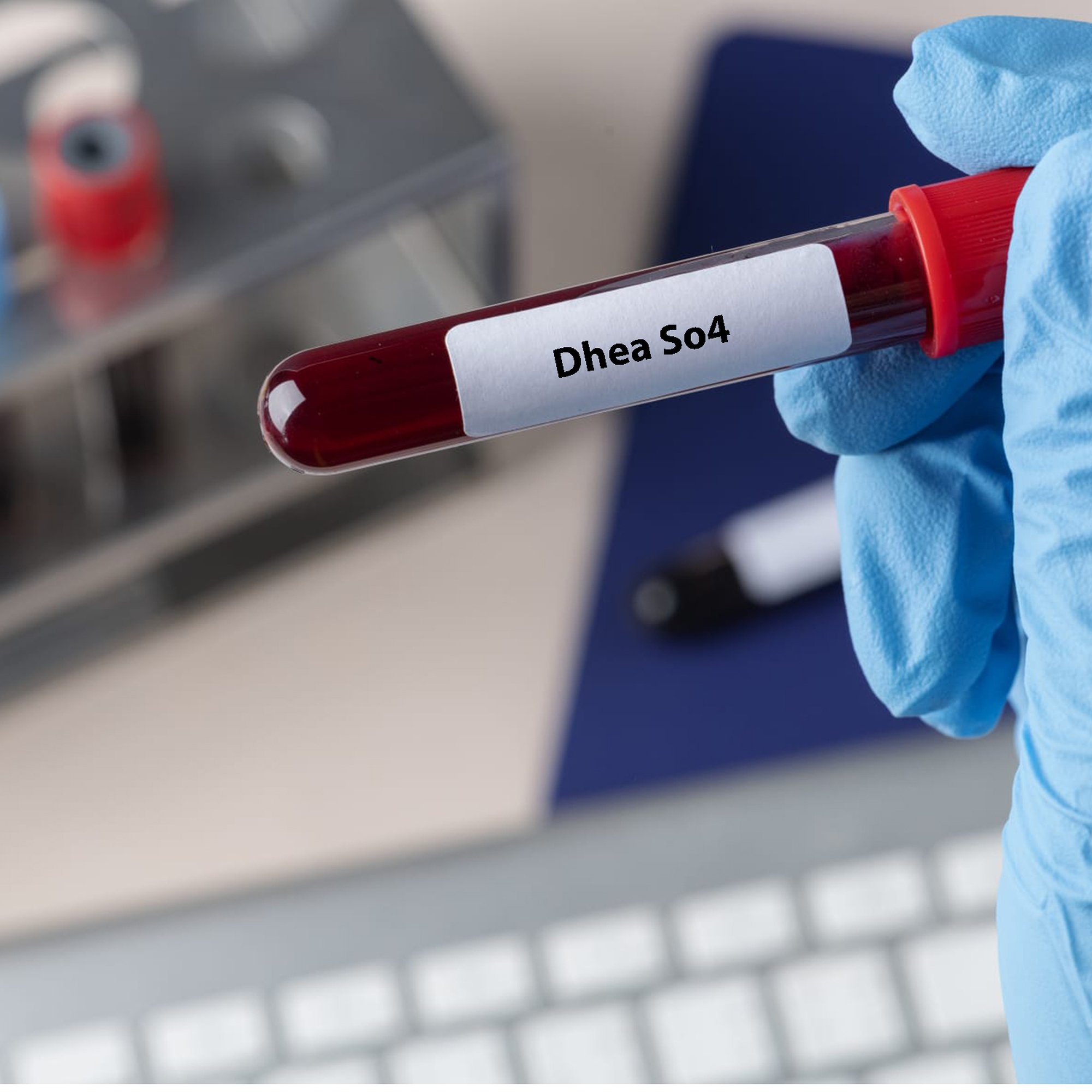
Dhea So4
DHEA-S (dehydroepiandrosterone sulfate) is the abbreviation for dehydroepiandrosterone sulfate. Dehydroepiandrosterone (DHEA) is a precursor hormone produced in the adrenal glands and is an essential hormone in the body. It forms the structure of sex hormones, estrogen, and testosterone.
DHEA is a precursor hormone in the body that can be converted into sex hormones. It is secreted by the adrenal glands and released into the bloodstream as either DHEA or DHEA-S (sulfate form). DHEA-S is the sulfate form of DHEA and can remain in the bloodstream for a longer period.
DHEA levels tend to decrease with age. Factors such as stress, physical activity, diet, and other elements can also influence DHEA levels.
Although the role and effects of DHEA in the body are not yet fully understood, some studies suggest that DHEA may have an impact on the aging process and could potentially offer benefits in areas such as the immune system, energy levels, and skin health. However, more research is needed regarding the long-term effects and safety of DHEA supplementation.
DHEA-S levels can be used in assessing some health conditions. Particularly, it can be used in evaluating adrenal gland function, sexual development disorders, certain hormonal imbalances, and other medical conditions. Therefore, measuring DHEA-S levels can serve as a tool in diagnosing or monitoring some hormonal conditions. However, interpreting results and making conclusions usually relies on a doctor's clinical evaluation, so guidance from a doctor may be necessary to evaluate or treat any medical condition.
What Is the Dhea So4 Test?
The DHEA-S (dehydroepiandrosterone sulfate) test is a medical test that measures the level of dehydroepiandrosterone sulfate. DHEA-S is the sulfate form of dehydroepiandrosterone, a hormone produced in the adrenal glands. This test is conducted by taking a blood sample and is aimed at determining DHEA-S levels.
DHEA-S levels can be used to evaluate adrenal gland function, diagnose certain hormonal imbalances, or monitor them. This test can assist in assessing some conditions; however, interpreting results and treatment decisions rely on a doctor's clinical evaluation. Requesting this test to evaluate or treat any medical condition usually requires a doctor's recommendation.
When Is the Dhea So4 Test Ordered?
1. Adrenal Gland Function Disorders:
DHEA-S levels can be used to assess adrenal gland function. Adrenal glands play a crucial role in the body's stress response, metabolism, and hormonal balance. The DHEA-S test can help evaluate whether adrenal glands are functioning normally or abnormally.
2. Sexual Development Disorders:
DHEA-S levels can be used to evaluate some sexual development disorders, particularly those related to the production and effects of sexual hormones.
3. Hormonal Disorders:
DHEA-S levels can aid in diagnosing or monitoring some hormonal disorders. For example, this test can be used to assess hormonal changes associated with conditions like polycystic ovary syndrome.
4. Libido Issues or Infertility:
DHEA-S levels might be examined as a factor in evaluating libido issues or infertility.
5. Anti-Aging and Anti-Stress Treatments:
In some cases, DHEA supplementation might be recommended for anti-aging or anti-stress treatments. In such instances, monitoring DHEA-S levels can help evaluate the effectiveness of the treatment.
However, the DHEA-S test alone might not be sufficient for diagnosing a specific condition. Generally, it is evaluated in conjunction with clinical symptoms, the patient's medical history, and other test results. Determining when to request the test usually relies on a doctor's clinical assessment of the need to evaluate or treat a particular condition. Therefore, the ordering of the DHEA-S test and the interpretation of its results usually occur under a doctor's guidance.