

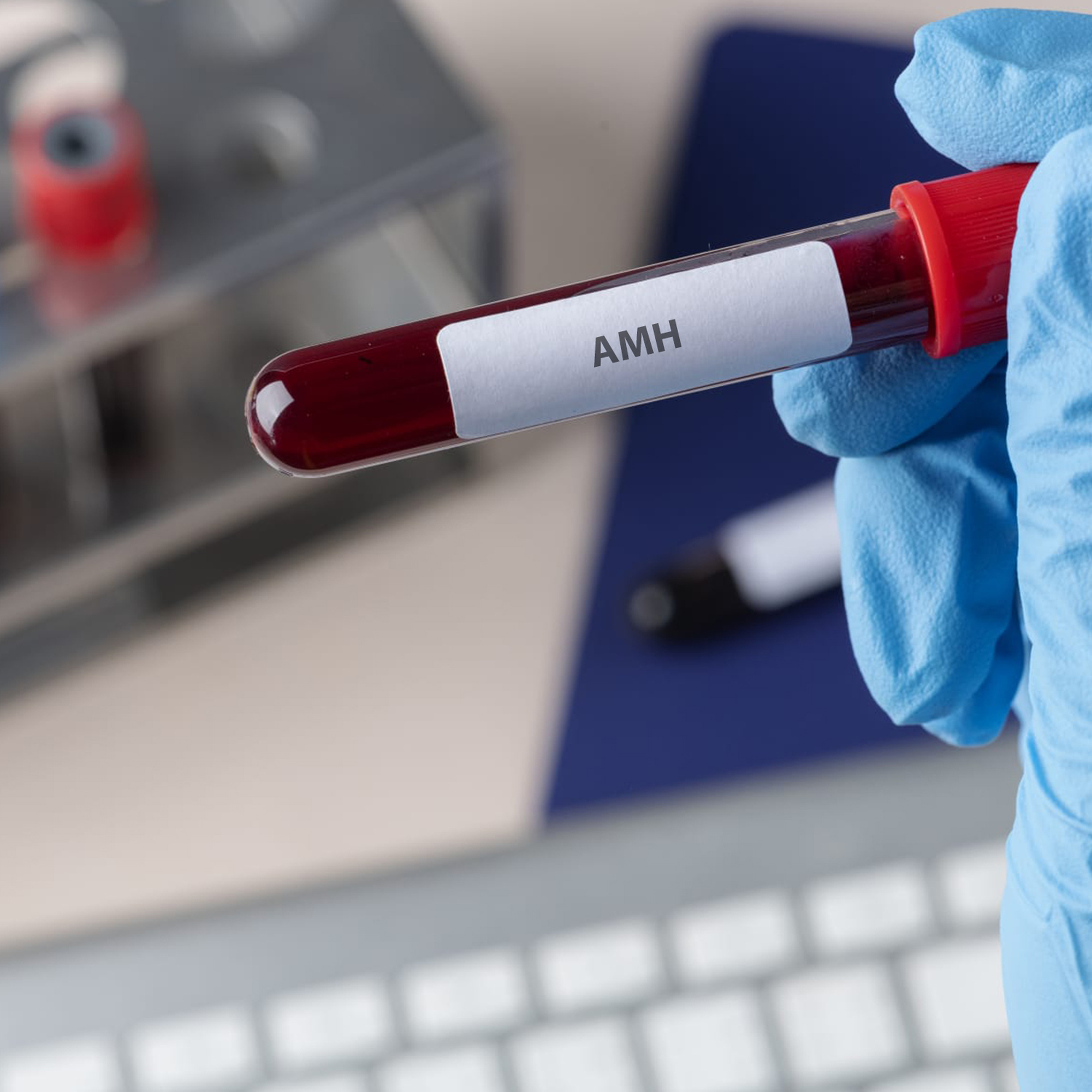
Anti-Müllerian Hormone (AMH)
Anti-Müllerian Hormone (AMH) is a hormone typically produced in females. It is produced by small follicles in the ovaries and is often associated with female reproductive health. AMH levels can help indicate a woman's ovarian reserve and fertility potential.
AMH levels are used to determine female fertility potential and assess ovarian reserve. High levels of AMH are usually associated with a greater ovarian reserve and fertility potential, while low levels may indicate a diminished ovarian reserve or reduced reproductive capacity in women.
This test can be used to identify causes of infertility, evaluate women's reproductive health, or estimate ovarian reserve for women considering assisted reproductive technologies such as in vitro fertilization (IVF).
While AMH levels are often used as an indicator of female reproductive health, they should not be used alone to assess the likelihood of pregnancy. Other factors such as age, overall health, egg quality, among others, can influence the likelihood of pregnancy.
This test is requested by doctors and, when interpreting the results, takes into account an individual's specific situation and clinical symptoms. AMH levels are generally considered as an indicator of a woman's ovarian reserve but are assessed in conjunction with other fertility factors.
What is the AMH Test?
The Anti-Müllerian Hormone (AMH) test is a medical test used to assess women's ovarian reserve. Produced by small follicles in the ovaries, this hormone helps indicate a woman's fertility potential and ovarian reserve. High AMH levels are often associated with a greater ovarian reserve, while low levels may indicate a reduced ovarian reserve or a potential decline in reproductive capacity. This test is used to evaluate women's reproductive health, identify causes of infertility, or estimate ovarian reserve for assisted reproductive technology purposes. However, it should not be solely relied upon to determine the likelihood of pregnancy, and other factors need to be considered when interpreting results. Typically requested by doctors, the AMH test is evaluated in conjunction with a person's specific medical situation and clinical symptoms. It serves as an indicator of female reproductive health but is considered alongside other fertility-related factors.
When is the AMH Test Requested?
1. Assessment of Fertility Potential and Ovarian Reserve:
The AMH test is used to determine women's fertility potential and ovarian reserve. High AMH levels are usually linked to a greater ovarian reserve, while low levels may indicate reduced ovarian reserve or decreased reproductive capacity.
2. Evaluation of Infertility:
It is used in the evaluation of women experiencing infertility to determine ovarian reserve and provide information about reproductive potential.
3. Assisted Reproductive Technologies (ART) Treatments:
AMH levels can be examined to predict ovarian reserve and the likelihood of success in ART (Assisted Reproductive Technologies) procedures. A woman's ovarian reserve can influence the response to such treatments.
4. Polycystic Ovary Syndrome (PCOS) and Ovulation Issues:
Conditions like PCOS or ovulation disorders may be considered alongside AMH testing for assessing hormonal balance and determining reproductive capacity.
5. Fertility Planning Before Cancer Treatment:
Young women planning cancer treatment may undergo AMH testing to assess their ovarian reserves and preserve their fertility for the future.
The AMH test is requested by a doctor when needed to evaluate or treat a specific condition. The interpretation of results and subsequent treatment or assessment is determined based on the patient's clinical situation. While the test results generally provide information about a woman's reproductive health, it should not be used alone to determine the likelihood of pregnancy.