

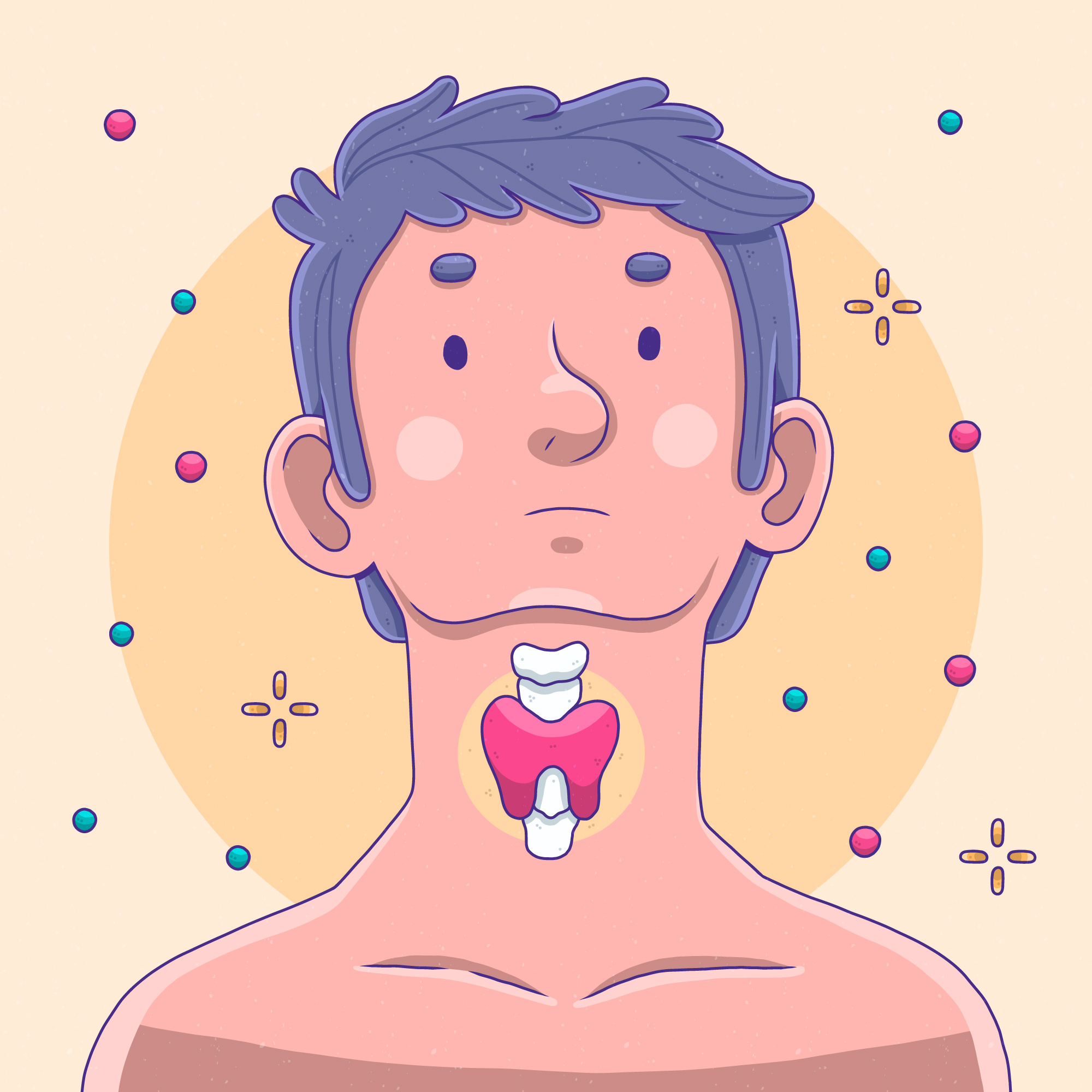
Tiroid bezinin normal düzeyden az ya da aşırı hormon salgılamasına bağlı olarak, diğer organlar da hızlı ya da yavaş çalışır. Tiroit hormonlarının az salgılanması yani hipotiroidi durumunda bağırsaktan saç teline kadar bütün metabolizma yavaşlayarak, saç dökülmesi, unutkanlık, uykuya eğilim, kilo alma, halsizlik, seste kalınlaşma gibi şikayetler ortaya çıkar. Peki tiroid belirtileri nelerdir?
Tiroid, sıklıkla bir hastalık adı olarak bilinse de aslında boğazda adem elması olarak bilinen bölgenin altında, soluk borusunun önünde yer alan bir organdır. Bu hormonun fazlalığı yani hipertiroidi durumunda ise aşırı terleme, saç dökülmesi ve hızlı kilo kaybı görülür.Tiroid bezinin çalışmasını yönlendiren emir hormonu beyindeki hipofiz bezinden gelir. Hipofiz bezinden salgılanan TSH hormonu (Tiroid Uyarıcı Hormon veya Tiroid Stimule Edici Hormon), kan yoluyla tiroid bezine gelerek T3 ve T4 hormonlarının tiroid bezinden salgılanmasını sağlar.
Bu hormonlar metabolizmayı düzenlemenin yanı sıra bağışıklık sisteminin çalışmasında çok büyük öneme sahiptir; kalp atış hızı ve vücut ısısı gibi süreçleri etkiler ve besinleri enerjiye dönüştürür.
Anne rahmindeki fetüste ve yeni doğan bebekte beyin ve zeka gelişimini sağlar. Çocuğun büyüme ve gelişmesini yönlendirir. Yetişkinlerde şeker, yağ ve protein metabolizmasını ayarlar.
Vücuttaki bu önemli görevleri nedeniyle tiroid bozuklukları önemli sağlık sorunlarına yol açar ve tedavi edilmelidir. Sinsice ilerleyen tiroit bezi sorunlarında tedavi, hastalığın türüne göre değişir. İlaç tedavisi ile hormonların yerine konması ya da düzenlenmesi, ilaç tedavisinin yetmediği durumlarda risk faktörleri radyoaktif iyot tedavisi ve bu bezin alındığı cerrahi uygulanabilir.
TİROİD NEDİR?
U ya da H harfine benzetilen ve kelebeği andıran şekle sahip olan tiroid, vücutta pek çok fonksiyonun düzenlenmesini sağlayan hormonların üretiminden sorumludur.T3 (triiyodotironin) ve T4 (tiroksin) hormonlarının yanı sıra kalsitonin hormonunun üretimini, depolanmasını ve gerektiğinde salınmasını sağlayan tiroid, yaklaşık olarak bir ceviz büyüklüğündedir ve toplam ağırlığı 15 ila 20 gr kadardır. Dörder cm boya, bir ila ikişer cm ene sahip olan, sağ ve sol loblardan oluşan tiroidin orta bölümü ise tıp dilinde isthmus olarak tanımlanır.Tiroid bezinden salgılanan hormonlar, kan dolaşımına karışarak ilgili sistem ya da organın uyarılmasını sağlar. Vücut sağlığı açısından oldukça önemli olan tiroid bezi fonksiyonlarının düzenli olması, vücutta oluşan metabolik süreçlerin hemen hemen tümünü etkiler. Farklı bir deyişle vücuttaki aktivitelerin pek çoğu üzerinde etkisi bulunan hormonların salınımını kontrol eden tirodt bezi, vücutta yer alan endokrin bezlerinden biridir. Tiroid bezinin hormon üretimi, depolanması ve salınımı gibi fonksiyonları ise beyinde bulunan hipotalamus bölgesi tarafından salgılanan TRH hormonunun, yine beyinde yer alan ve bir başka endokrin bezi olan hipofiz bezini uyarmasıyla hipofiz bezi tarafından kontrol edilir.
TİROİD BELİRTİLERİ NELERDİR?
İç salgı bezlerinden biri olan tiroid, T3 (triiyodotironin) ve T4 (tiroksin) adlı hormonların üretilmesi ve kan dolaşımına salınmasından sorumlu organdır. Metabolizmayla ilgili tüm işlemlerin kontrol edilmesini ve yürütülmesini sağlayan tiroid bezinin bu fonksiyonlarını yerine getirememesi durumunda pek çok farklı sağlık problemi ve buna bağlı olarak belirtiler oluşur. Tiroid belirtileri olarak da tanımlanan bu durum, tiroid bezinin az ya da çok çalışmasına bağlı olarak pek çok farklı hastalıktan kaynaklanabilir.Tiroid belirtileri şu şekilde sıralanabilir:
-Yorgunluk ve hâlsizlik,
-Beslenme düzeninde belirgin bir değişim olmaksızın kilo almak ya da kilo vermek,
-Sürekli uyku isteği, dinç uyanamamak, gün içinde bitkin hissetmek, uykuya dalamamak gibi uyku problemleri,
-Depresif ruh hâli, konsantrasyon eksikliği, hafızanın zayıflaması, bilincin bulanık olması, anksiyete, panik atak gibi ruhsal ve zihinsel değişimler,
-Kol ve bacaklarda ani uyuşma ya da karıncalanma hissi, kas ve eklem ağrıları, kasların zayıflaması gibi kas veya eklem problemleri,
-Regl döneminde oluşan sancı ve ağrı şiddetinin artması, âdet kanamasının normalden daha uzun ya da daha kısa sürmesi, âdet döngüsünün düzensizleşmesi gibi menstrüasyon problemleri,
-Libidonun düşmesi, cinsel isteksizlik ve kısırlık gibi problemler,
-Uzun süren kabızlık, ishal ve bağırsak hareketlerinde yavaşlama gibi bağırsak problemleri,
-Tüm diyet uygulamaları, egzersiz ve ilaç kullanımına rağmen kolesterol seviyesinin düşük ya da yüksek seyretmesi,
-Hipertansiyon gibi kan basıncı değişimleri, küçük tansiyonun normal ya da düşük olmasına rağmen büyük tansiyonun yüksek olması,
-Kalp hızının normalden 10 ila 20 kez daha az çarpması gibi nabız problemleri,
-Saç dökülmesi, saçların kuru ve cansız gözükmesi gibi saç problemlerinin yanı sıra kirpik ve kaşlarda seyrelme, derinin kuruması, tırnakların kolay kırılmaya başlaması,
-Vücut sıcaklığının düşük olması, el ve ayakların soğuk hissedilmesi, sıcak hissetme, aşırı terleme gibi vücut sıcaklığı ile ilgili problemler.
KAYNAK: NTV HABER